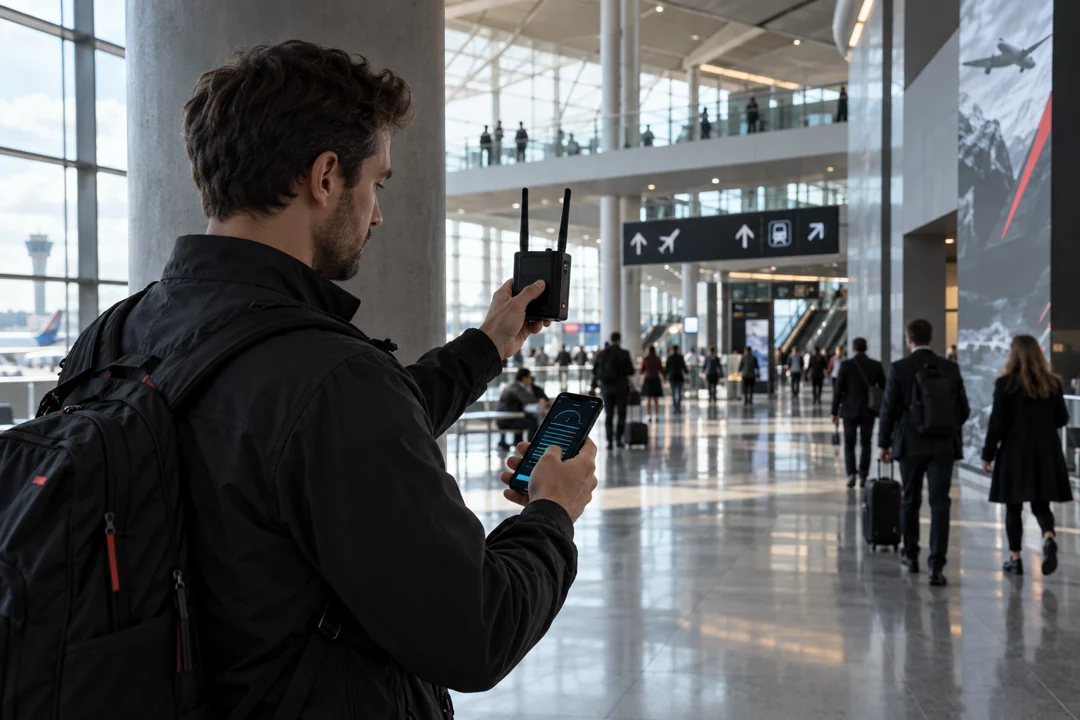
RRF · public-access buildings
Pre-diagnose radio continuity, identify weak areas and prepare a solution before work begins.
NoMYST Mission · radio continuity
Mission supports field teams before installation and after commissioning. It qualifies the need, guides the solution and verifies results under real site conditions.
Mission is the NoMYST method for radio-continuity pre-diagnosis and verification, before works and after installation, for RRF in public-access buildings, EV charging points and lone workers.
Measure before work begins to avoid blind choices and focus the intervention.
Compare positions, sources and routes to build a response suited to the site.
Repeat the same uses and verify that the expected continuity has actually been achieved.
Pre-diagnose radio continuity, identify weak areas and prepare a solution before work begins.
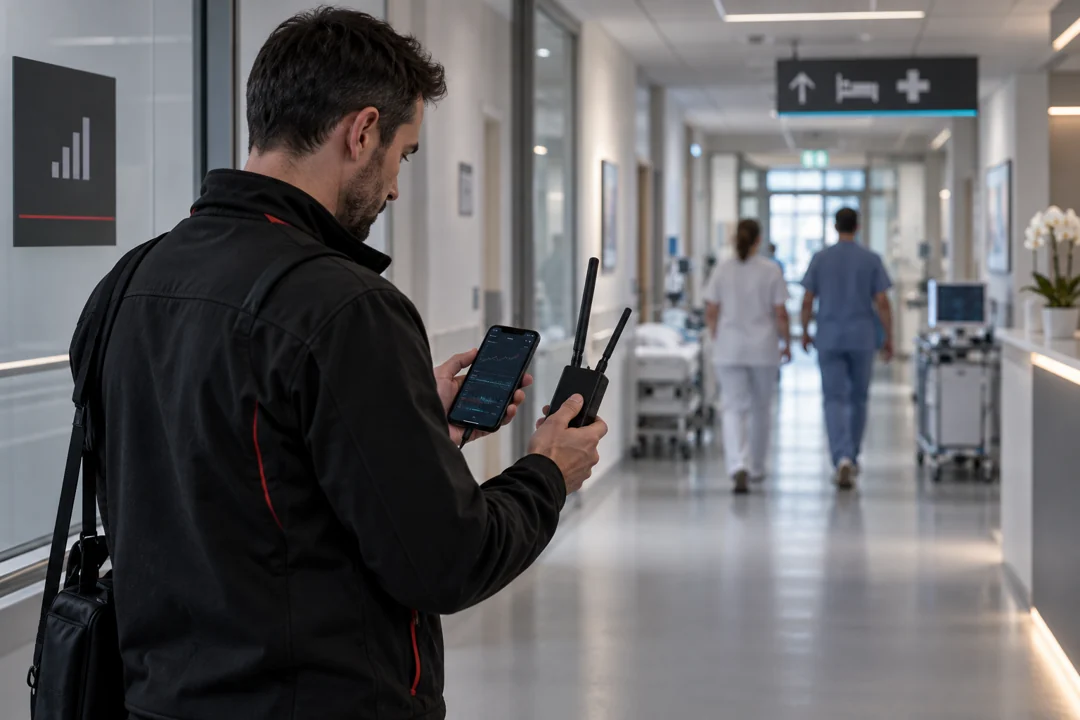
Verify that technicians and lone workers can reach the network in areas where their safety depends on it.
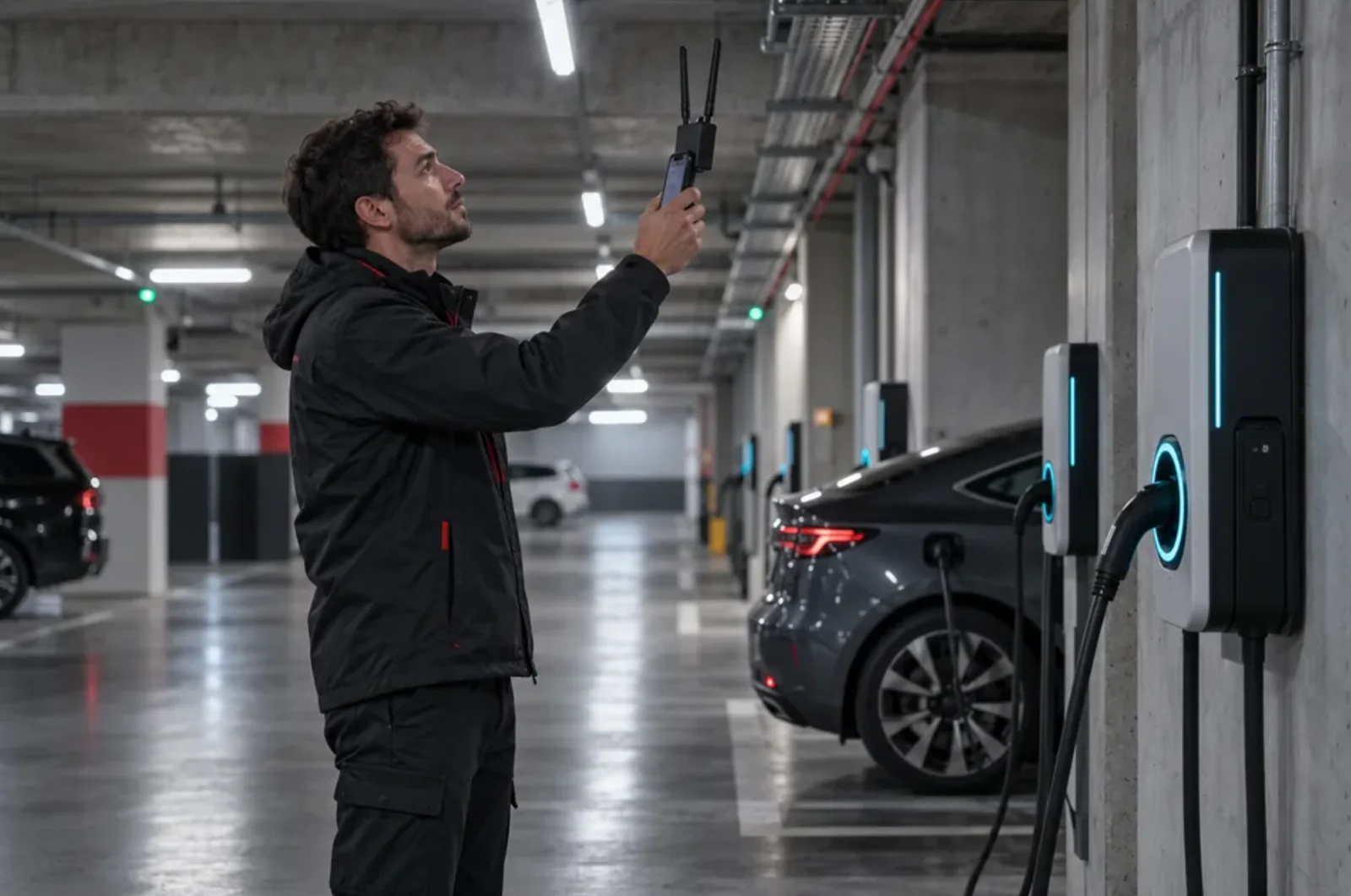
Find the position or link solution that keeps charging stations and connected systems reliably online.
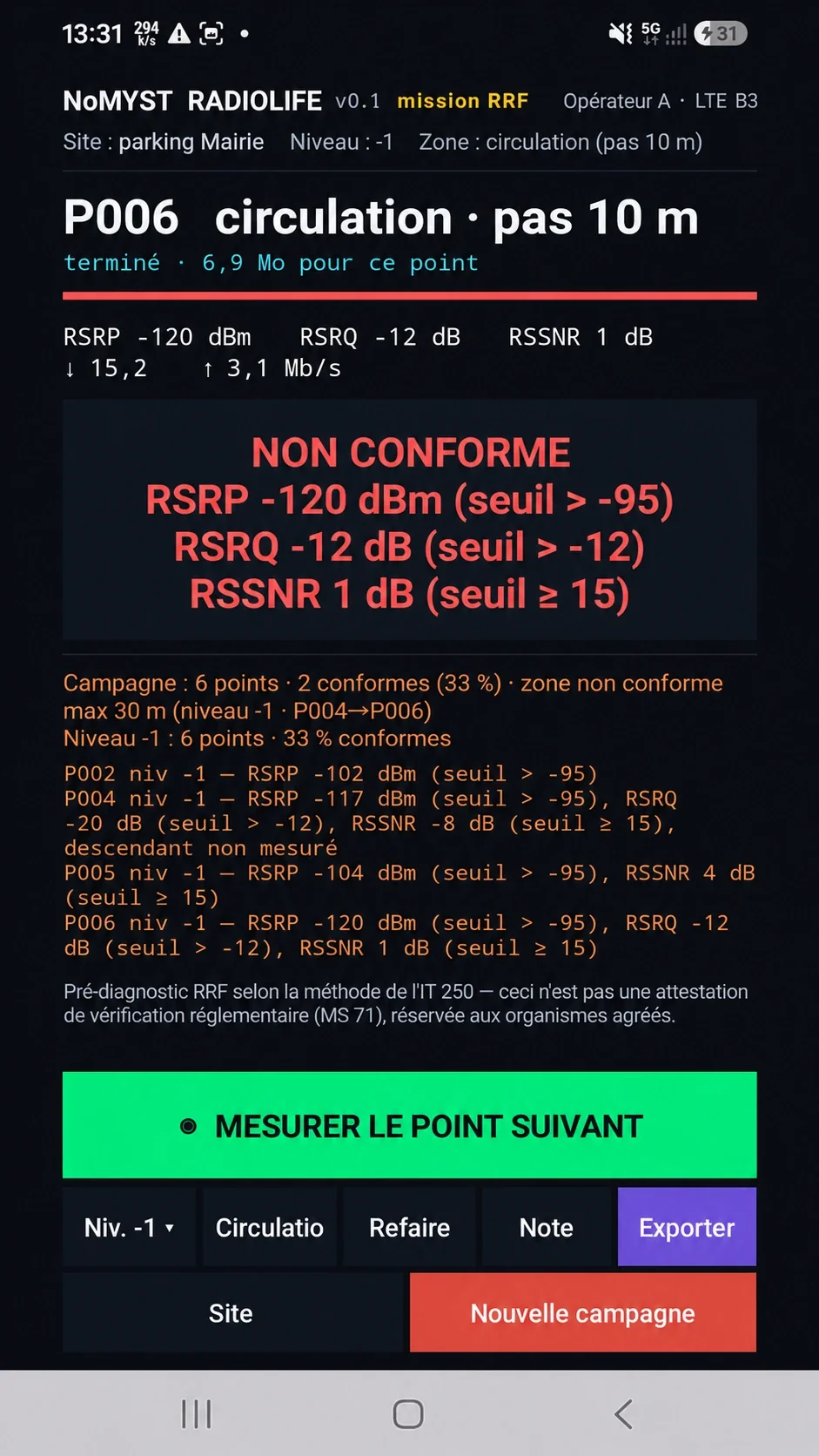
In a public-access building, a pre-diagnosis route starts from a compliant reference point at −75 dBm and documents, point after point, a non-compliant area that reaches 30 m at −120 dBm. The result exists at the end of the walk; it prepares the solution and is not a certificate.
Read the full case →Scout observes, compares and tracks radio sources. Pulse verifies actual communication quality. Mission organises these measurements around a continuity requirement: before work, while finding a solution and after installation.
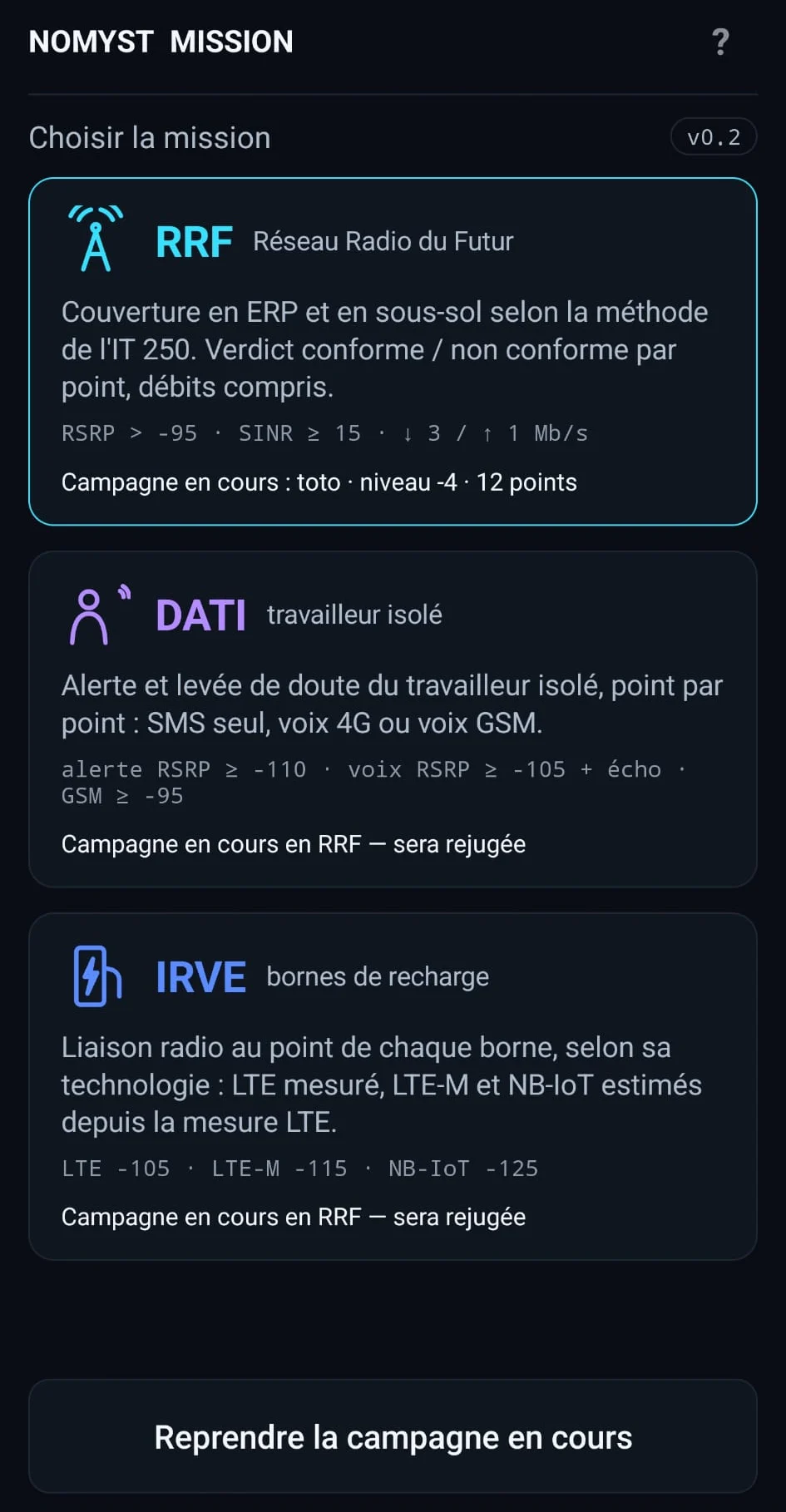
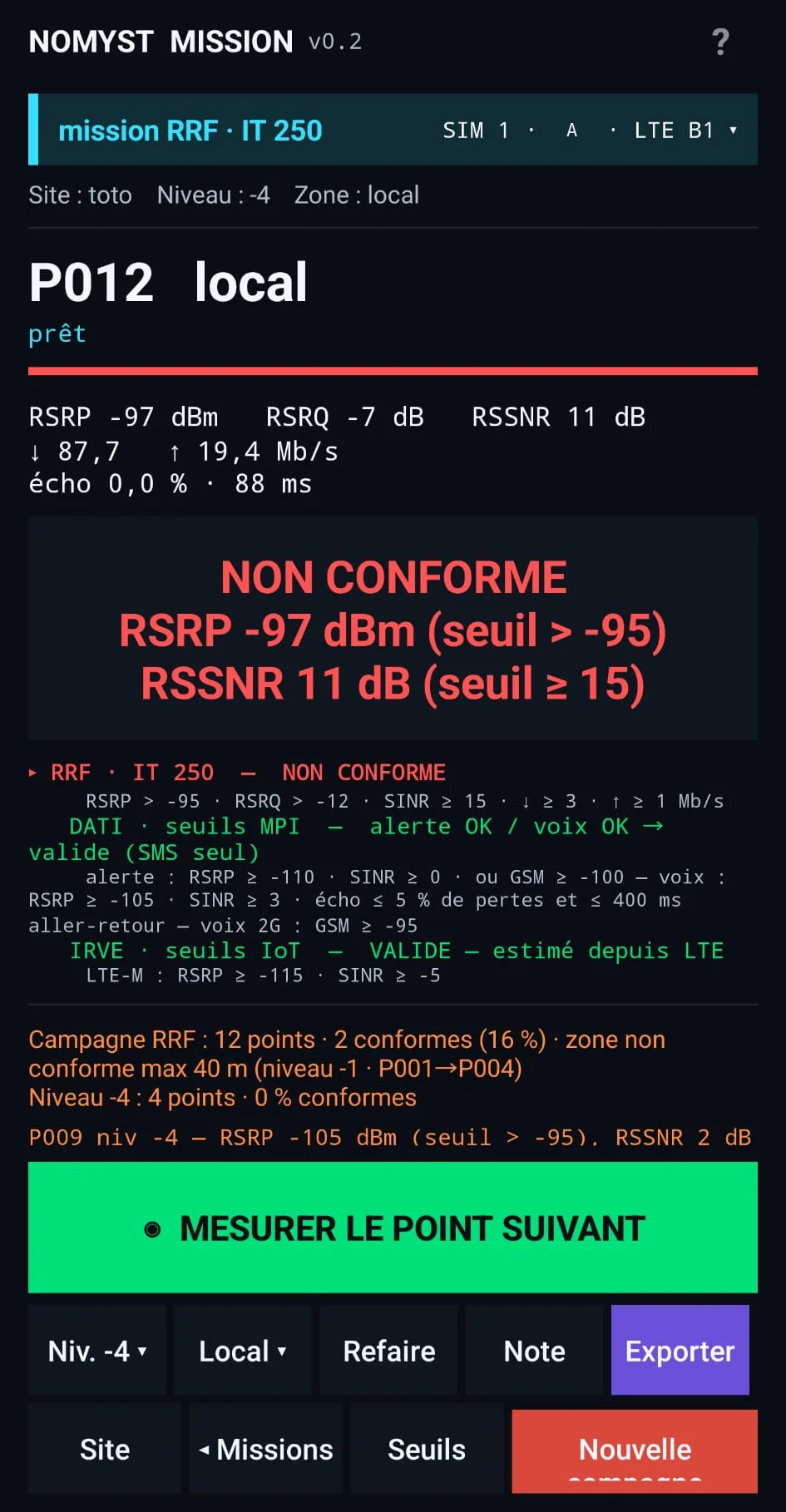
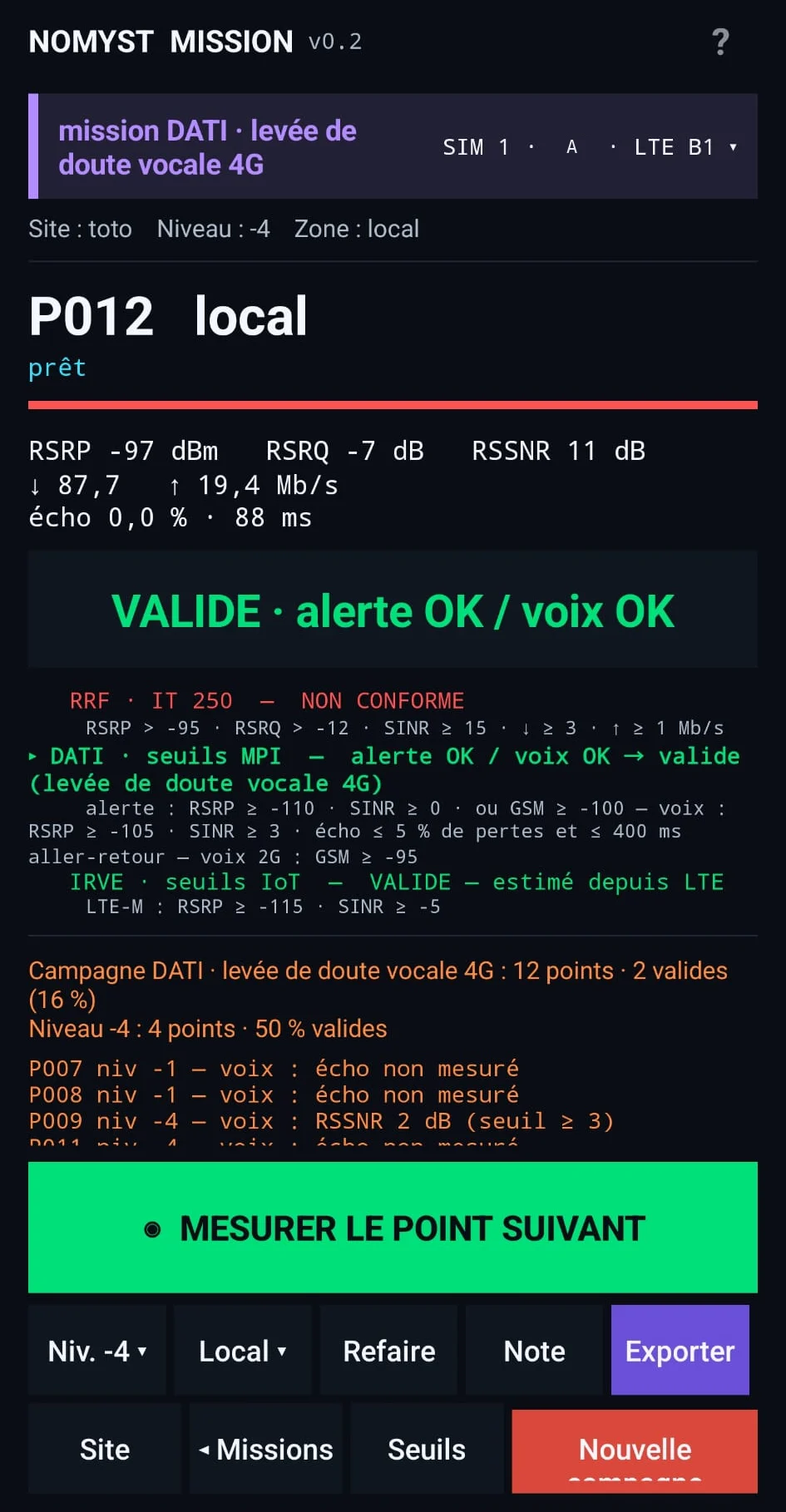
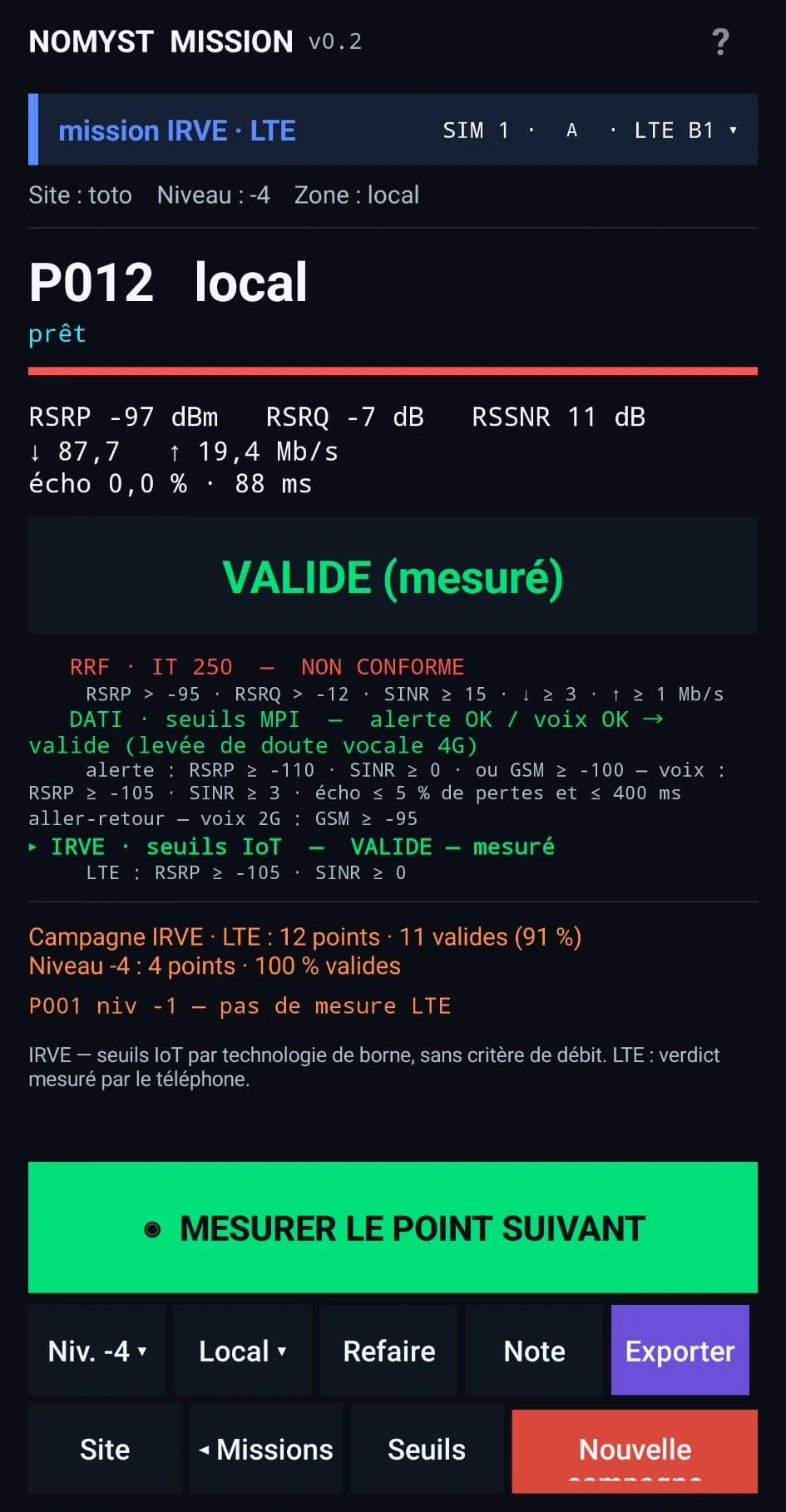
Screenshots of the Mission v0.2 app on a smartphone, anonymised: operator replaced by a letter, no location markers. The three readings show the same measurement point judged by each mission: non-compliant for RRF, valid for lone-worker (DATI) and for EV chargers. The verdict depends on the use case, not just on the signal.
| Compared with… | What Mission brings | What remains necessary |
|---|---|---|
| A regulatory certificate | A documented, point-by-point finding with the thresholds used, the equipment and the conditions. It locates the fault and prepares the solution. | A certificate requires a defined procedure and a recognised body or equipment: Mission prepares it, it does not replace it. |
| A theoretical coverage study | Real measurements in the building as it is, with its materials, doors and furniture. | Simulation remains useful at design stage, before the building exists. |
| A walk-through “with the phone” | Repeated passes, explicit thresholds and a point history, instead of a glance at the phone's signal bars. | Nothing: a walk-through with the phone is not a measurement. |
No. The report is a finding and a pre-diagnosis within the scope of its protocol. It states explicitly what requires a specific procedure or certificate.
Thresholds are set per campaign and written in the report (for example −104 dBm as the insufficient-quality limit in the published campaign). They follow the customer's or the network's specification.
A campaign builds up while walking: a few minutes for a simple route, a few hours for a whole building. The result is readable as soon as the walk ends.
To measure a given carrier's network without swapping SIM cards, yes: Scout's multi-carrier module. For the network of the installed SIM, the phone is enough.
The measured points with their level, the route history, the extent of non-compliant areas, the thresholds, the equipment used, the conditions and the limits of the finding.